Overview
Kumquat shows what a modern delivery platform involves end to end. It is not one app but four connected products sharing a single backend: Kumquat for customers, Kumquat Rider for couriers, a restaurant portal for merchants, and an admin console for operations.
Kumquat is a portfolio demonstration. It uses fictional restaurants and simulated transactions. No real charges or physical deliveries occur.
The challenge
Delivery platforms are hard because every order is a shared state between several people: the customer, the restaurant, the rider and support staff. Each needs a different interface, and all of them must agree on what is happening right now.
What we built
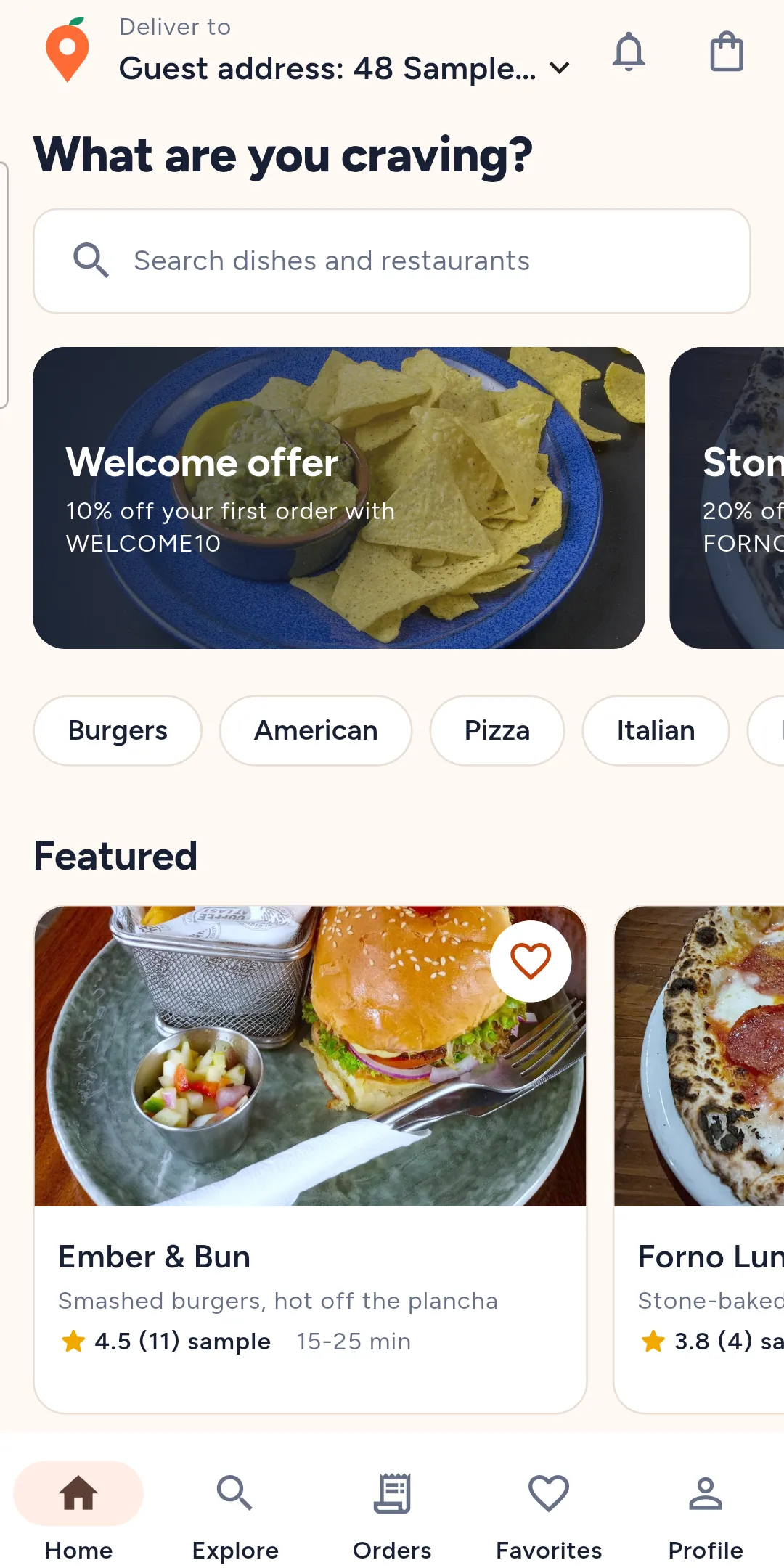
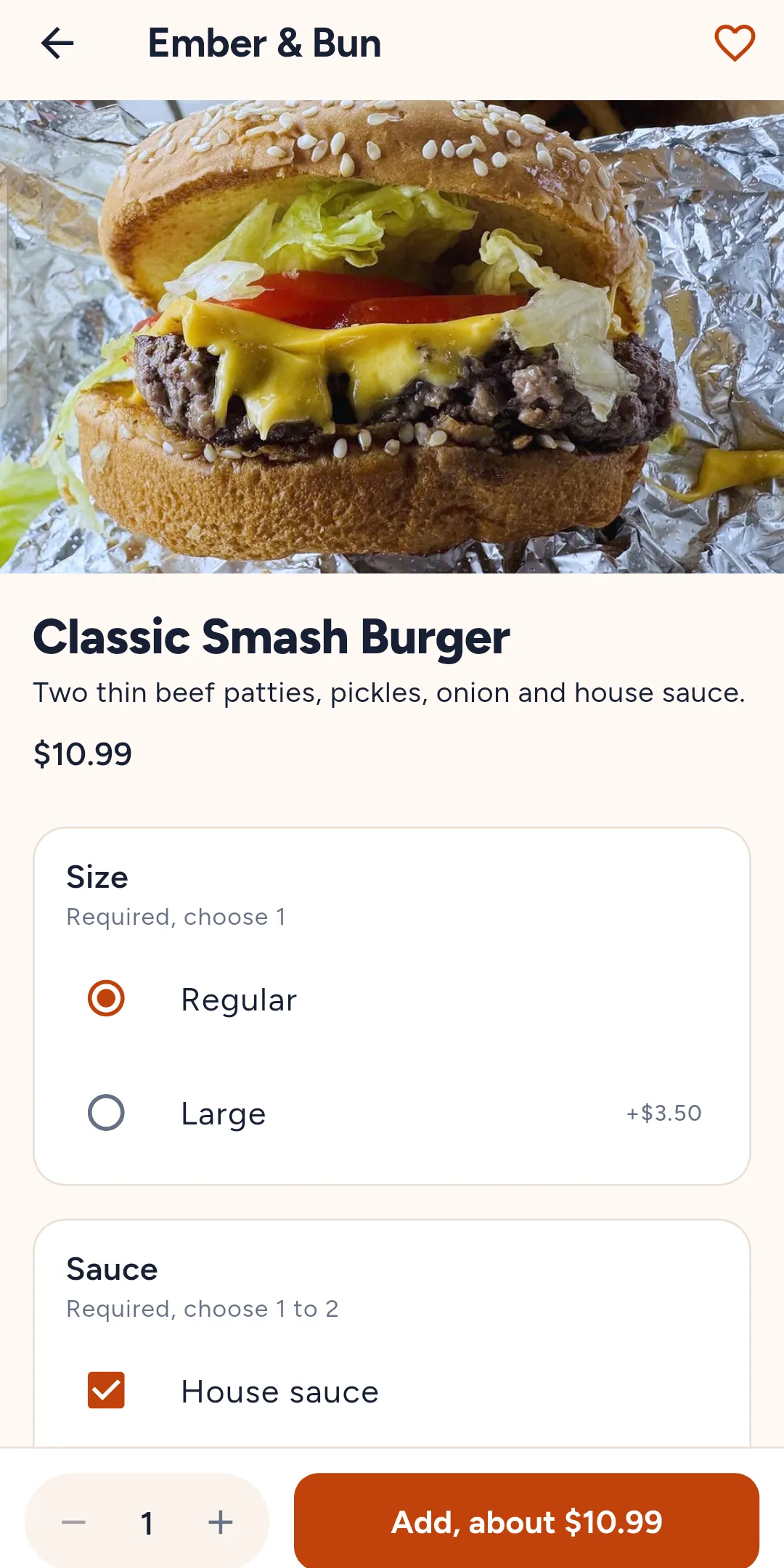
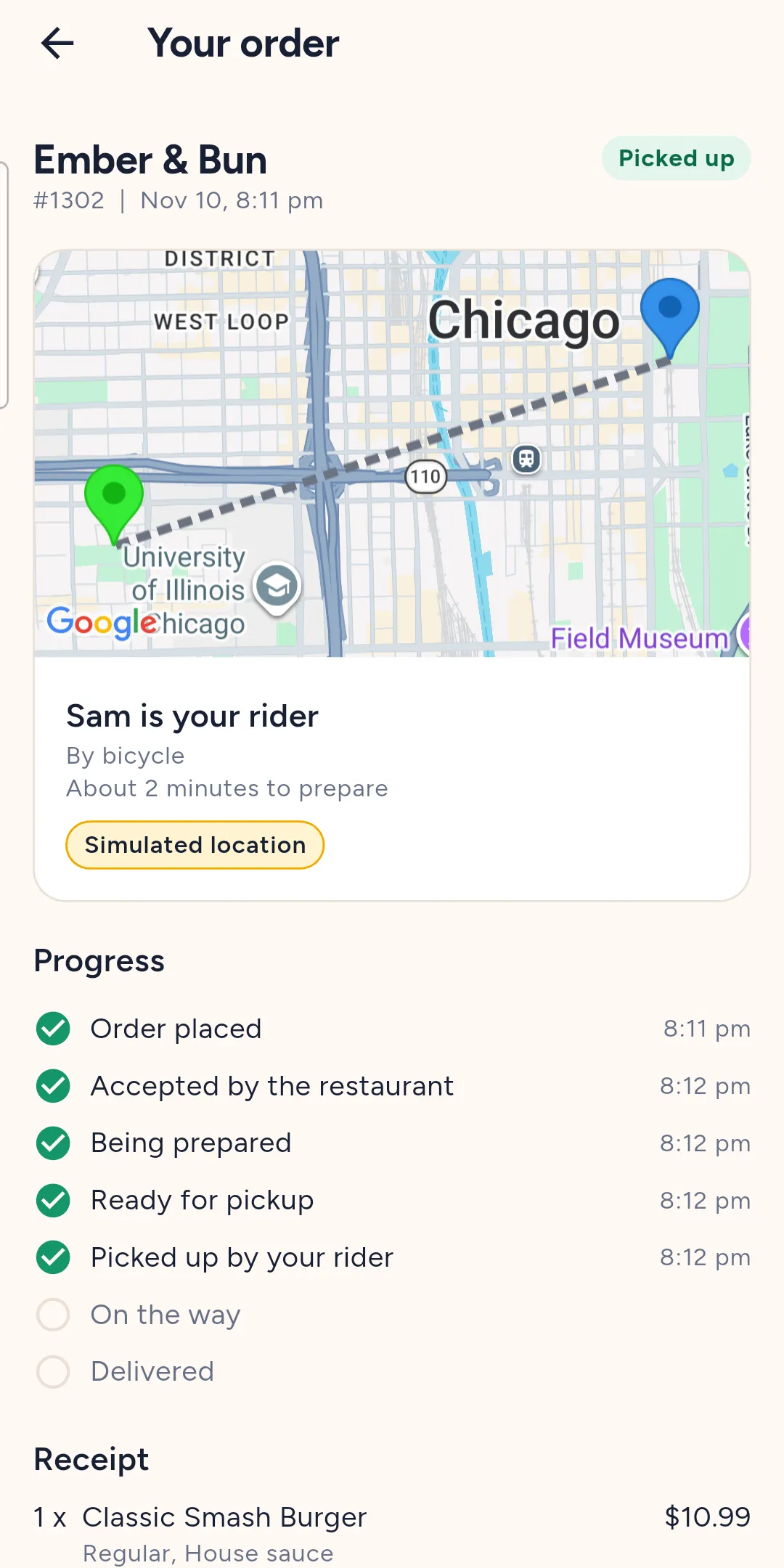
- Customer app (Flutter). Explore restaurants, customize dishes, check out with a test card and follow the order live.
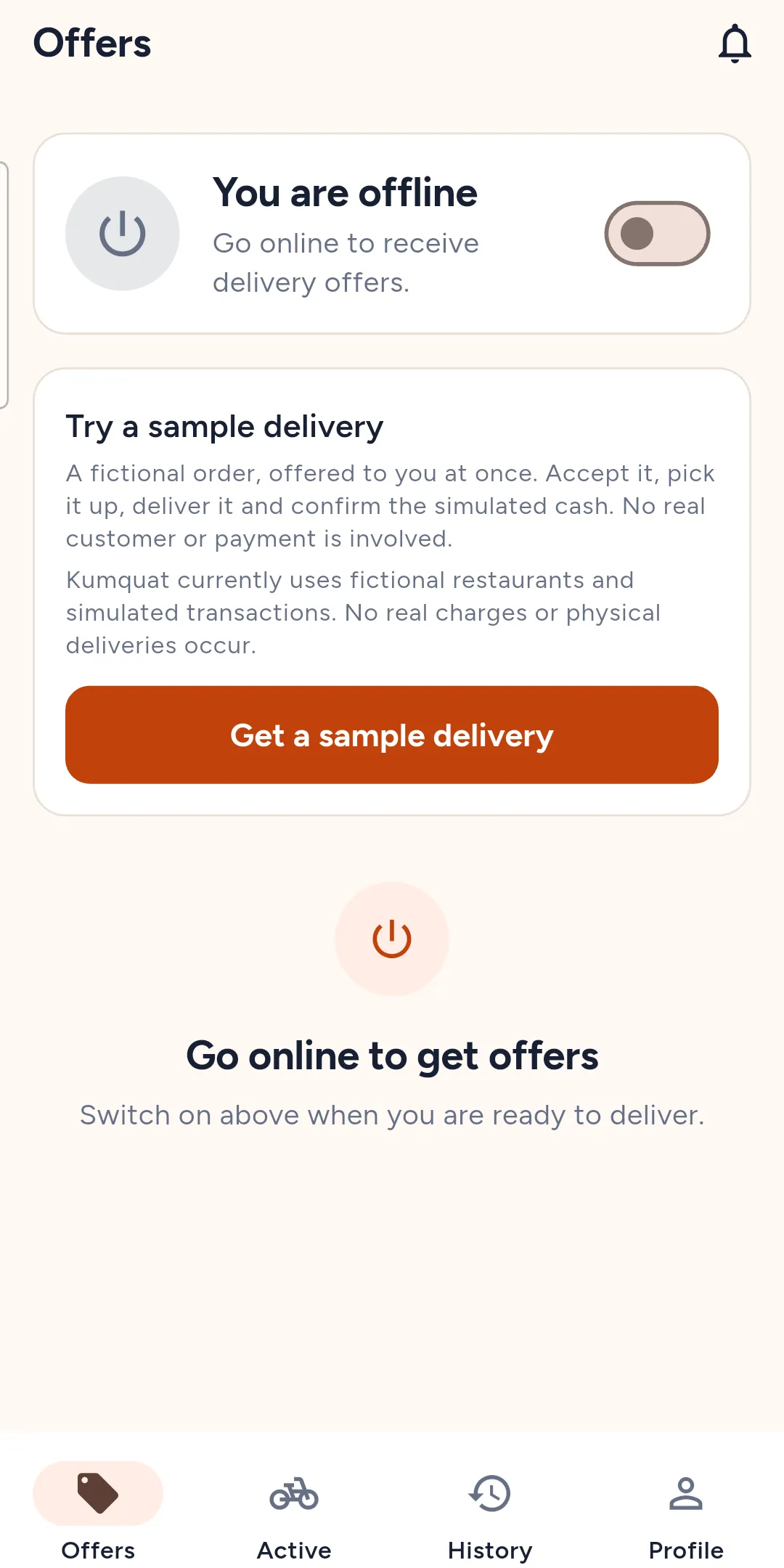
- Rider app (Flutter). Receive delivery offers, accept jobs, follow a simulated route and review earnings history.
- Restaurant portal (Next.js). Manage menus and work through an incoming order queue.
- Admin console (Next.js). Oversee operations, users and a finance overview.
- Shared foundations. Design tokens, authentication and data models are packaged once and reused by every client.
Engineering highlights
A single order state machine on Supabase drives every app, so status changes appear consistently everywhere. Rider movement is simulated on Google Maps for demonstration. Builds are versioned and prepared for Google Play closed testing.
Current status
The customer app build is ready for a Google Play closed test. Kumquat remains a demonstration platform and does not process real orders.